
Queens College Philosophy Conference
Beyond Function
The Self in the Modern World
–
Queens College, CUNYDining Hall 120 & 122 (Q-side)
65-30 Kissena Boulevard
Flushing, NY 11367
Keynote speakerJohn J. DavenportFordham University

Call for Papers
Submit a Paper
Submissions are open to students and scholars. Student papers—especially from Queens College students—are encouraged.
Read the full call for papers and suggested topics belowSubmission Guidelines
- Abstract
- 300–400 words. Clearly state the paper’s thesis and demonstrate its relevance to the conference theme.
- Paper
- Approximately 3,000 words or 10 double-spaced pages.
- Abstract Submission Deadline
Send your abstractanthony.malagon@qc.cuny.edu
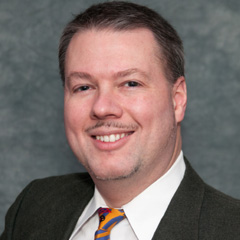
Keynote Speaker
John J. Davenport
Professor of Philosophy · Fordham University
John J. Davenport’s research explores free will and responsibility, personal identity, autonomy, virtue ethics, and the philosophy of religion. A scholar of Kierkegaard and the existential tradition, he is the author of Will as Commitment and Resolve and a past president of the Kierkegaard Society USA.
Fordham faculty profile01 / Call for Papers
The Self and the Modern Condition
The French existentialist Gabriel Marcel once diagnosed the defining problem of modernity as the "misplacement of the idea of function." In his famous essay, “On the ontological Mystery,” he describes modern society as essentially empty because it increasingly understands both the world and the person in terms of utility, efficiency, productivity, quantifiable performance, etc. In such a climate, the human person is easily reduced to a collection of functions rather than recognized as a unique and irreducible self. Marcel’s critical analysis of the modern condition as well as those of many of the early existentialist—Martin Buber, Karl Jaspesrs, Martin Heidegger, and even Soren Kierkegaard—raised serious concerns and broader philosophical questions that continue to confront us today, nearly a century later. How does contemporary social, technological, political, and economic structures shape our self-understanding? Do they promote authentic selfhood, or do they encourage forms of alienation that obscure what it means to be human? Do they encourage objectified relationships that engender I-it relations with? Do they promote a self-objectification that leads to mental illness?
Marcel offered his own unique repose to the perils—or sickness—of the “functionalized” world as the proper recognition and response to what he called the mystery of being, i.e. learning to access that which is beyond function. This conference invites students and scholars to provide their own analyses and explore such questions baring on the relationship between the self and the modern condition. We seek philosophical reflection upon the nature of selfhood and the ways in which contemporary realities influence our understanding of personal identity, agency, freedom, community, and what it means to live “the good life.” We are particularly interested in papers that examine how modern technological, scientific, philosophical, social, political, or religious developments contribute to—or challenge—our understanding of the self and the conditions of a good, meaningful, and fulfilling human life. Deeper philosophical reflection on the self enables us to reconsider or re-envision not only who we are, but also what kinds of conditions are necessary for genuine human flourishing. We welcome papers that creatively engage these questions from historical or contemporary perspectives, or that draw upon interdisciplinary approaches illuminating the nature of the self in the modern world.
02 / Suggested Topics
Suggested Topics
Preference will be given to papers related to the following topics:
- What does it mean to be a self in the modern world?
- Can religion provide practical or ontological grounding amid the perils of modern existence, or is modernity antithetical to religious and spiritual life?
- What does it mean to flourish, and how should we reconsider the good life under modern conditions?
- Can we still become ourselves? How should we understand authenticity, alienation, and meaning?
- Are we truly autonomous? What does agency mean for the modern self?
- How has technology—including social media, automobiles, airplanes, firearms, and artificial intelligence—transformed selfhood?
- How does artificial intelligence influence human self-understanding?
- Who are we online, and how does social media shape the digital self?
- When does a person become a product? How does consumer culture commodify the self?
- What would it mean for artificial intelligence to be a self, and how should we relate to it?
- What moral issues are most pressing as artificial intelligence continues to develop?
- How does globalization affect culture and personal identity?
- What can existentialism and phenomenology teach us about selfhood?
- What have classical, modern, and contemporary philosophical approaches taught us about the self?
Thinkers of interest
We are especially interested in—though not limited to—papers engaging thinkers such as Søren Kierkegaard, Gabriel Marcel, Karl Jaspers, Emmanuel Levinas, Martin Buber, Simone Weil, Charles Taylor, Alasdair MacIntyre, Hannah Arendt, Paul Ricoeur, Edith Stein, Maurice Merleau-Ponty, and other philosophers whose work contributes to our understanding of selfhood, personhood, and the challenges of modern existence.
03 / Organizer
About the Organizer
Anthony Malagon is a lecturer at Queens College. He has a Ph.D. in philosophy from Purdue University. He teaches courses in philosophy of religion, ethics, existentialism, and Eastern philosophy. He takes both existential and analytic approaches to questions of knowledge, truth, religion, ethics, and the self. He is editor of the collection The Religious Existentialists and the Redemption of Feeling and has a forthcoming book, An Existential Proof of God.
65-30 Kissena Boulevard
Flushing, NY 11367 Visit the Philosophy Department